
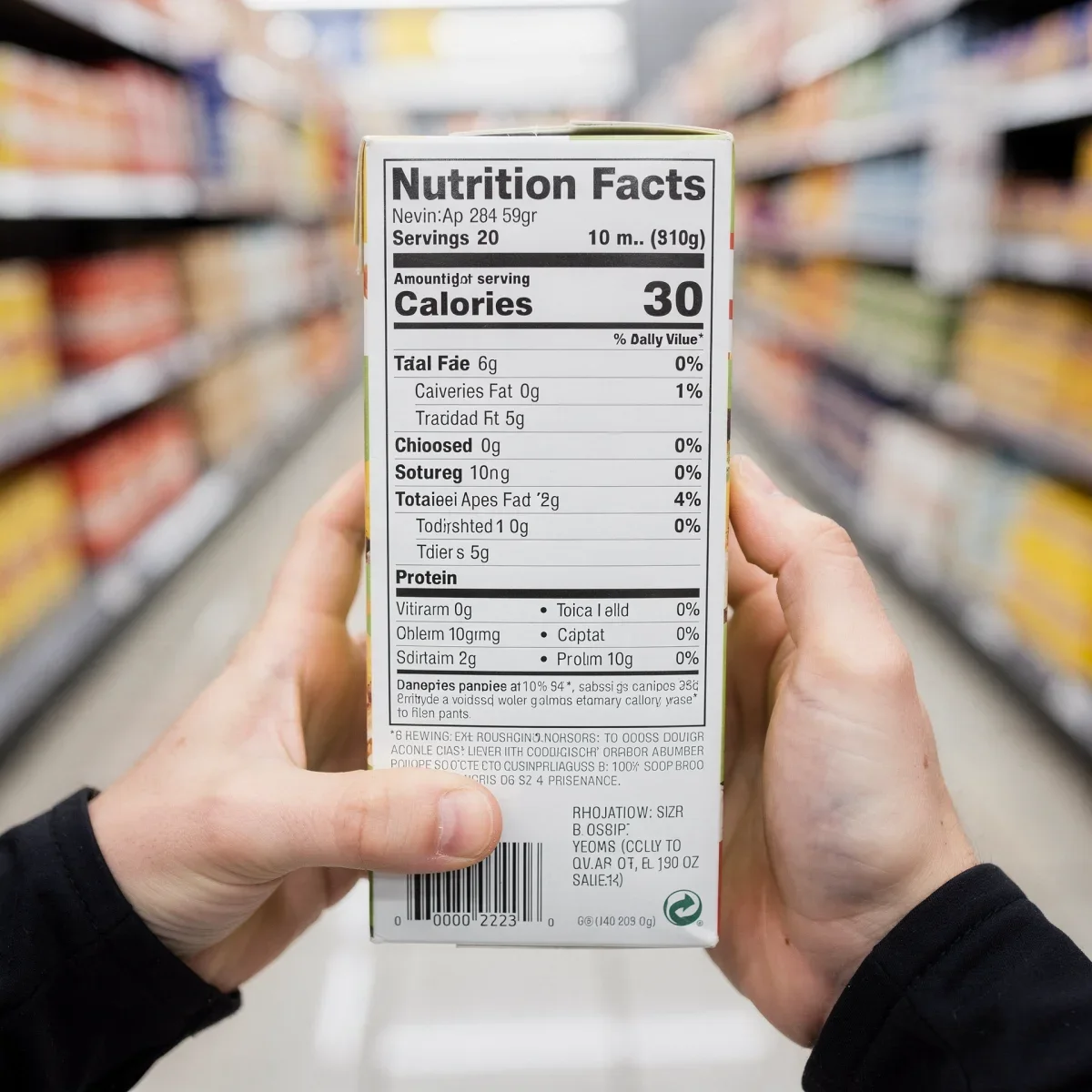
Standing in the grocery store aisle trying to figure out if that box of cereal or jar of pasta sauce is actually healthy can feel overwhelming. Food packages are covered with flashy marketing claims like "all-natural," "heart-healthy," and "low-fat," but the real truth hides on the back panel. Knowing how to read a nutrition label gives you the power to make informed dietary choices without falling for clever branding traps.
Advertisements
The standardized Nutrition Facts panel was created by the U.S. Food and Drug Administration (FDA) to give consumers transparent nutritional data. However, tiny fonts, confusing percentages, and complex chemical names often turn a quick shopping run into a decoding exercise. This guide breaks down every section of the label into clear, actionable steps so you can shop with total confidence.
Step 1: Check the Serving Size First
Before you look at calories or sugar content, your eyes should always go directly to the top of the label where the serving size is listed. All the numbers printed on the Nutrition Facts panel apply to that specific amount of food—not necessarily the entire package.
Manufacturers often list surprisingly small serving sizes to make a product look lower in calories, sodium, or sugar. For example, a single 16-ounce bottle of iced tea might contain two or even two-and-a-half servings. If you drink the whole bottle, you have to multiply every single number on that label by two or three to see your actual intake.
Here are key elements to check in this top section:
- Servings Per Container: Tells you how many individual portions are inside the entire package.
- Serving Size: Displayed in familiar household measures like cups, tablespoons, or pieces, followed by the metric weight in grams.
- Dual-Column Labels: Some larger packages that could be eaten in one sitting (like a pint of ice cream or a large bag of chips) feature dual columns. One column shows the values per serving, while the other shows the totals for the entire container.
Step 2: Understand Calories in Context
Calories measure the energy provided by the food you eat. On modern U.S. labels, the calorie count is printed in large, bold text so it stands out immediately. While calories matter for energy balance, they only tell part of the nutritional story.
A snack containing 200 calories rich in dietary fiber, protein, and healthy fats will keep you energized and satisfied much longer than a 200-calorie snack made of refined flour and high-fructose corn syrup. Use the calorie count as a baseline measurement, but always look deeper into where those calories come from.
Step 3: Master the 5/20 Rule for Percent Daily Value (%DV)
The Percent Daily Value (%DV) column runs down the right side of the label and indicates how much a nutrient in a single serving contributes to a standard 2,000-calorie daily diet. You do not need to do complex math to use this number effectively. Nutrition experts recommend the simple 5/20 rule:
- 5% DV or less is considered LOW: Aim for low percentages on nutrients you want to limit, such as saturated fat, sodium, and added sugars.
- 20% DV or more is considered HIGH: Aim for high percentages on beneficial nutrients you want more of, such as dietary fiber, vitamin D, calcium, iron, and potassium.
Keep in mind that your personal daily calorie needs might be higher or lower than 2,000 calories depending on your age, biological sex, height, weight, and physical activity level. Even so, the %DV serves as a reliable benchmark to compare two competing brands quickly.
| Nutrient Category | Nutrient Name | Goal for Most Adults |
|---|---|---|
| Nutrients to Limit | Saturated Fat, Sodium, Added Sugars | Target 5% DV or less per serving |
| Nutrients to Prioritize | Dietary Fiber, Vitamin D, Calcium, Potassium, Iron | Target 20% DV or more per serving |
Step 4: Decode Fats, Sodium, and Added Sugars
When you read a nutrition label, understanding the specific types of fats, carbohydrates, and minerals is crucial for long-term health.
The Difference Between Healthy and Harmful Fats
Total fat includes saturated fat, trans fat, and unsaturated fats. Look for foods where the majority of fats come from heart-healthy monounsaturated and polyunsaturated sources (like olive oil, nuts, and avocados). Saturated fat should be limited, as high intake is linked to elevated LDL cholesterol. Trans fat should be as close to zero grams as possible.
Watching Your Sodium Intake
The American Heart Association recommends that most adults limit daily sodium intake to under 2,300 milligrams, with an ideal limit of 1,500 milligrams for individuals managing hypertension. Canned soups, salad dressings, cured meats, and frozen dinners are common sources of hidden sodium. Always check the milligrams and the %DV for sodium before adding processed items to your shopping cart.
Total Sugars vs. Added Sugars
FDA updates require labels to separate "Total Sugars" from "Added Sugars." This distinction is a major win for consumers. Total sugars include naturally occurring sugars found in plain dairy products (lactose) and whole fruit (fructose). Added sugars, on the other hand, are sweeteners introduced during processing, such as cane sugar, high fructose corn syrup, honey, or concentrated fruit juice puree. Keeping added sugars low is key to supporting metabolic health.
Step 5: Scan the Ingredient List for Hidden Fillers
The ingredient list is located directly below or beside the Nutrition Facts panel and tells you what is actually inside the product. By law, ingredients are listed in descending order by weight. The first three to four ingredients make up the vast majority of what you are eating.
Watch out for sneaky naming conventions. Food manufacturers frequently use multiple types of sweeteners—such as dextrose, maltose, evaporated cane juice, and agave nectar—so that no single sugar item appears at the very top of the list. If you see various syrups and sugars scattered throughout the list, the food is likely loaded with added sweetness.
Quick Takeaways
- Start with serving size: All calorie and nutrient calculations depend on the actual portion size you consume.
- Use the 5/20 benchmark: Aim for 5% DV or less for saturated fat, sodium, and added sugars; aim for 20% DV or more for fiber, vitamins, and minerals.
- Inspect the ingredients list: Ingredients are listed by weight from highest to lowest, making the first three ingredients the most telling.
Frequently Asked Questions
What is the most important thing to check on a nutrition label?
The serving size is the most critical item to check first. Every other value on the label—including calories, sodium, and sugar—is based entirely on that specific portion measurement.
Why are added sugars listed separately from total sugars?
Added sugars are listed separately to help you distinguish between naturally occurring sugars in whole foods (like fruit or milk) and refined sweeteners introduced during manufacturing that offer zero nutritional benefit.
How do I know if a product is truly high in fiber?
Check the %DV column next to Dietary Fiber. A product with 20% DV or more (around 5 grams or higher per serving) is considered an excellent source of dietary fiber.
Next Steps for Smarter Shopping
Taking just thirty seconds to properly read a nutrition label before dropping an item into your cart can transform the way you nourish your body. The next time you visit your local Target, Trader Joe's, or supermarket, pick up two competing brands of your favorite staple and compare their serving sizes, added sugars, and fiber content side by side. Small, mindful swaps add up to significant wellness gains over time.
This article is for informational purposes only and is not a substitute for professional medical advice. Talk to your doctor before making changes to your health routine.