
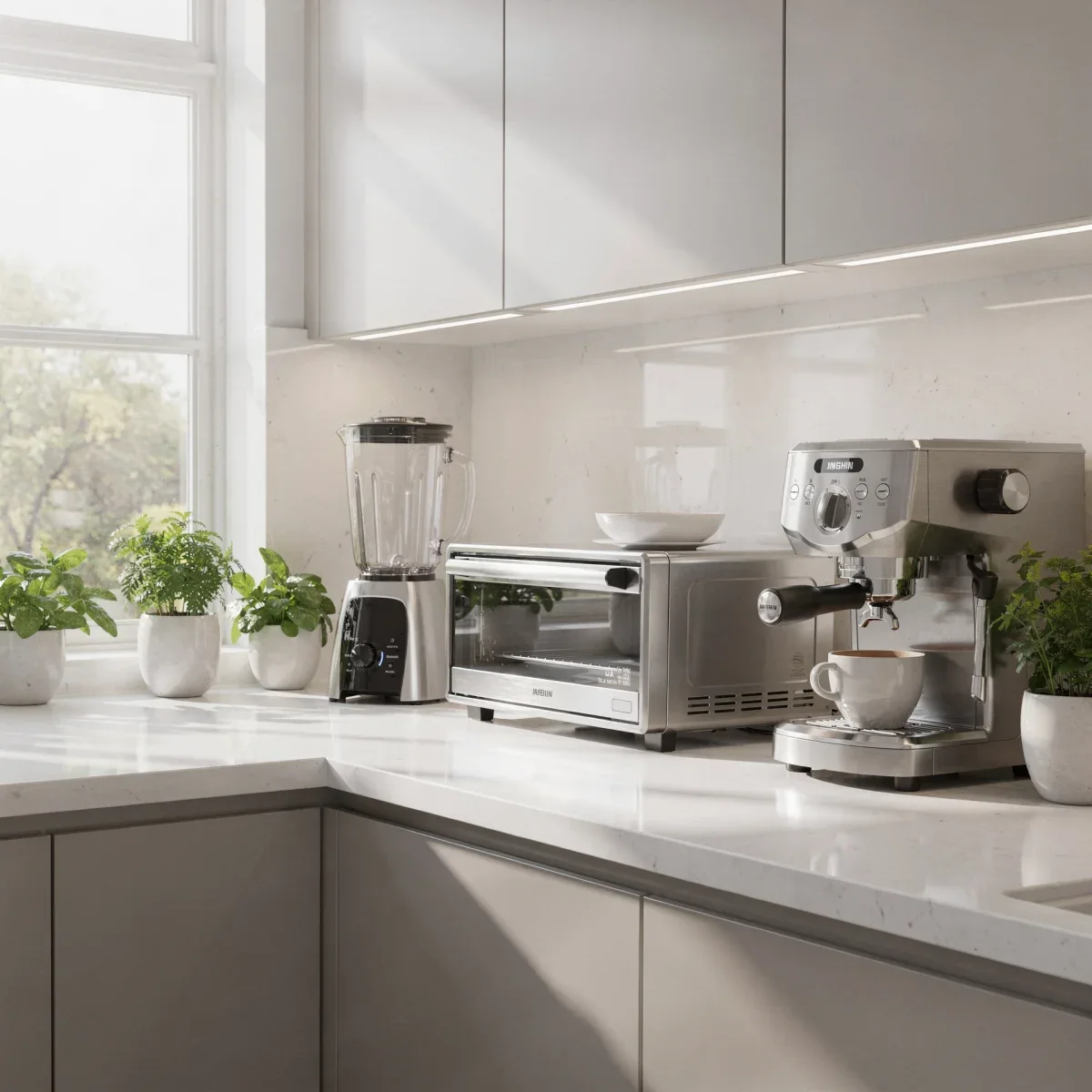
Countertop real estate is prime property in any home. When every square inch matters, leaving an appliance out full-time means it must deliver genuine daily value, streamline your routine, and outperform basic manual prep. Finding the right kitchen gadgets worth counter space comes down to picking versatile, durable tools rather than single-purpose novelties that collect dust.
Advertisements
Too many specialty tools end up shoved into the back of lower cabinets after two uses. If you want to keep your meal prep fast and your surfaces clear, this guide highlights the appliances that justify their footprint day after day.
The Golden Rules: How to Determine Counter-Worthiness
Before leaving any appliance on your counter permanently, run it through a practical three-part test. If a tool fails even one of these criteria, stash it in a pantry or cabinet instead.
- Frequency of Use: Do you realistically reach for it at least four to five days a week? If it only comes out for weekend baking or holiday parties, it does not belong on your main workspace.
- Multi-Functional Capability: Can the gadget replace two or three standalone appliances? Units that toast, air-fry, bake, and roast simultaneously free up cabinet space while minimizing visual clutter.
- Footprint-to-Weight Ratio: Is the machine too heavy or bulky to haul in and out of a cupboard regularly? Heavy stand mixers or espresso machines stay on the counter largely because moving them invites strain and dropped bowls.
Top Appliances That Earn Their Footprint
Based on durability, versatility, and real-world performance, these workhorse appliances consistently earn top marks from home cooks.
1. Multi-Functional Air Fryer Toaster Ovens
Traditional single-basket air fryers are bulky cylinders that dominate space while handling modest portion sizes. Multi-function countertop convection ovens solve that problem by combining a standard toaster, convection bake oven, broiler, dehydrator, and air fryer into one rectangular unit.
Because they can crisp sheet-pan dinners, toast morning bagels, reheat leftovers without sogginess, and roast a whole four-pound chicken, they often replace your full-sized oven for everyday meals. Leading models from brands like Breville, Ninja, and Cuisinart offer wide interiors that accommodate standard 9x13 baking dishes while maintaining an efficient countertop profile.
2. High-Powered Commercial-Grade Blenders
Cheap personal blenders struggle with ice, frozen fruit, and tough greens, leaving fibrous textures. Investing in a high-powered blender (such as a Vitamix Explorian or 5200 series) gives you a machine that liquefies smoothies, mills whole grains into flour, whips hot pureed soups directly in the container, and blends nut butters.
Their tall or low-profile pitcher designs fit comfortably under standard 18-inch upper kitchen cabinets. Because you can use them for breakfast smoothies, midday salad dressings, and evening sauces, they earn a continuous spot right next to the prep station.
3. Programmable Multi-Cookers
The rise of electric pressure cookers fundamentally changed weeknight dinner prep. A 6-quart multi-cooker combines a pressure cooker, slow cooker, rice cooker, yogurt maker, and sauté pan into a single self-contained unit.
Instead of pulling out a heavy Dutch oven, a standalone rice cooker, and a slow cooker throughout the week, one multi-cooker handles dried beans in 30 minutes, fork-tender pot roasts in an hour, and perfect Jasmine rice in ten minutes. If you meal-prep on Sundays and cook fresh staples during the week, this tool easily validates its storage footprint.
4. Quality Compact Espresso and Drip Coffee Stations
If you visit local cafes multiple times per week, a dedicated countertop coffee or espresso station pays for itself in both convenience and savings. Compact semi-automatic espresso machines (like the Breville Bambino Plus) measure less than six inches wide, delivering cafe-quality milk texturing and espresso extraction without swallowing prep areas.
For drip enthusiasts, precision brewers with thermal carafes eliminate the scorched taste of heated hot plates while maintaining an organized, streamlined look beside your mug storage.
Countertop Footprint vs. Daily Utility Comparison
Here is how the top kitchen performers stack up across average dimensions, key functions, and daily utility ratings:
| Appliance Type | Average Width | Primary Functions | Daily Utility |
|---|---|---|---|
| Air Fryer Toaster Oven | 15 to 18 inches | Air fry, toast, bake, broil, reheat | High (3x/day) |
| High-Speed Blender | 7 to 9 inches | Smoothies, purees, soups, dressings | High (1-2x/day) |
| Electric Multi-Cooker | 12 to 14 inches | Pressure cook, slow cook, steam, sear | Moderate/High (4-5x/week) |
| Compact Espresso Maker | 6 to 11 inches | Espresso, steam milk, Americanos | High (1-3x/day) |
| 8-Cup Food Processor | 8 to 10 inches | Shred, slice, knead dough, chop | Moderate (2-3x/week) |
Overhyped Gadgets to Keep Off Your Counter
Counter clutter often happens when single-use items remain on display. To preserve your workspace, relocate or reconsider these common offenders:
- Single-Purpose Novelty Cookers: Dedicated quesadilla presses, egg-bite makers, and cake-pop irons consume valuable space while offering limited capacity. A standard nonstick skillet or your oven can perform all these jobs just as well.
- Standalone Juicers: Centrifugal and masticating juicers take up wide footprints and involve multiple finicky parts to scrub. Unless you drink fresh celery or carrot juice every morning, keep them tucked in a cupboard.
- Specialty Bread Machines: Unless you bake loaves three times a week, a standard Dutch oven paired with your main range yields artisanal bread with better crusts and zero added counter clutter.
How to Organize What Stays Out
Even the most useful appliances can make a kitchen look chaotic if left scattered across surfaces. Follow these organization habits to keep your counters looking pristine:
Group by Function: Create designated zones. Place your coffee grinder, espresso machine, and bean canister together in an unused corner to form a morning beverage station.
Tame Power Cords: Excess black appliance cords draping across bright quartz or granite surfaces create instant visual noise. Use adhesive cord wraps on the back of each machine to wind up surplus slack.
Utilize Appliance Sliders: Deep appliances like heavy blenders and multi-cookers often sit back against the wall under upper cabinets. Low-profile sliding trays allow you to roll them forward effortlessly when cooking to keep steam away from your cabinetry.
Quick Takeaways
- Choose versatile, multi-tasking units (like air fryer toaster ovens and multi-cookers) that replace multiple individual devices.
- Reserve counter placement exclusively for machines you use four or more times per week, or tools too heavy to move safely.
- Manage cords and group appliances by daily workflow zones to maintain a clean, intentional kitchen aesthetic.
Frequently Asked Questions
How do I decide which appliances stay on my counter?
Track your appliance usage for two full weeks. If you do not touch a machine at least four times during that period, pack it into a pantry, drawer, or lower cabinet.
Are multi-cookers better than standalone slow cookers?
Yes. Multi-cookers perform standard slow-cooking tasks while also offering rapid pressure cooking, rice steaming, and searing in a single footprint, eliminating the need for three separate bulky devices.
How do I protect my upper cabinets from appliance steam?
Place high-heat and high-steam machines, like electric pressure cookers and kettles, on sliding countertop mats so you can easily pull them past cabinet edges before releasing steam.
Keep Your Counters Functional and Clear
Choosing the right kitchen gadgets worth counter space turns your kitchen into an efficient, stress-free cooking environment. Focus on quality over quantity, prioritize multi-functional powerhouses, and store the rest away. Take an honest audit of your countertop today: clear off what you haven't touched this week and enjoy the extra prep space for your next meal.