
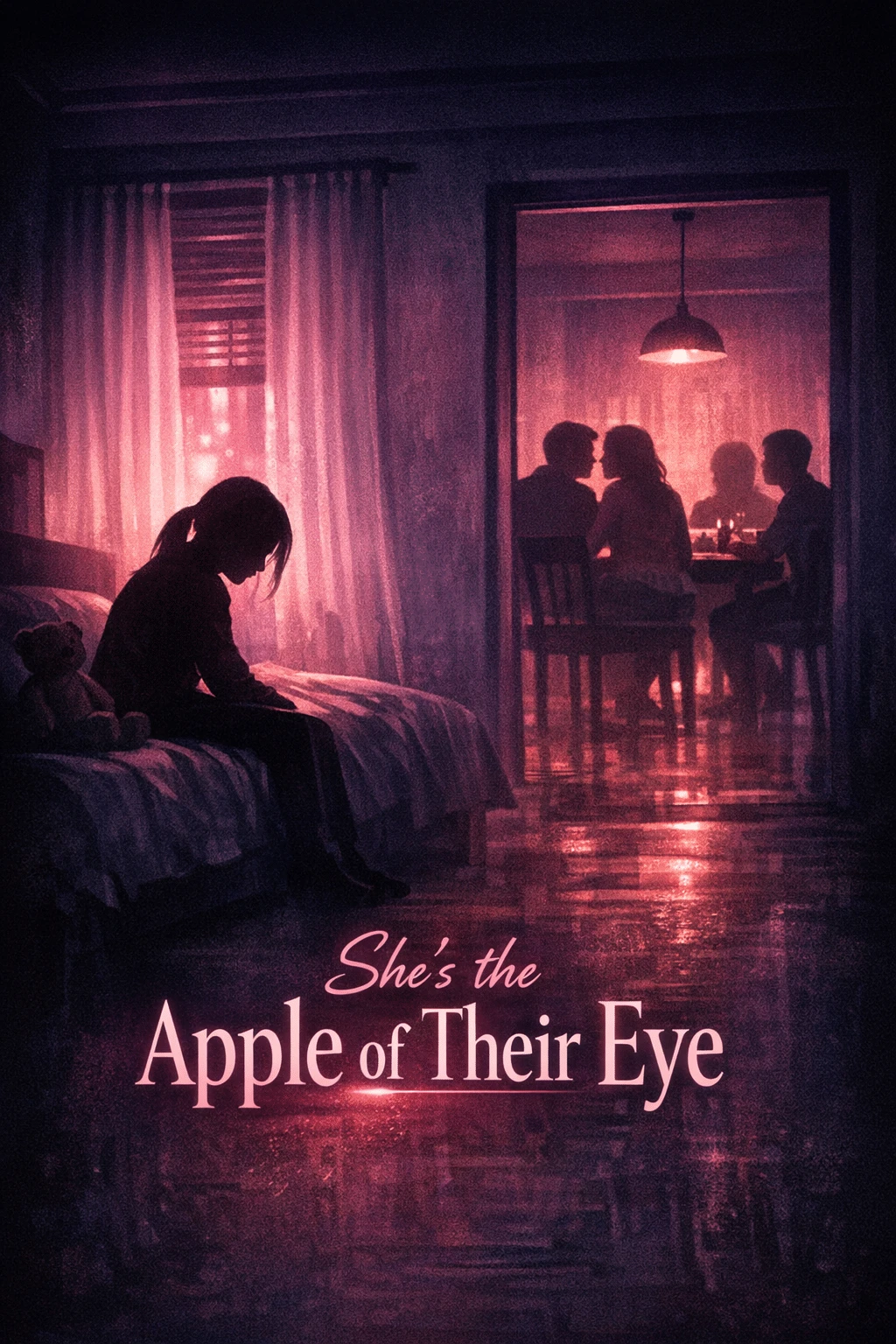
Hello, everyone! How are you doing? Today, I want to discuss a series that prompted me to think deeply about family relationships and how affection can sometimes be imbalanced at home – “The Family’s Favorite” on DramaBox. What an intriguing title! It immediately suggests a narrative centered around a beloved family member, yet, as is often the case, the reality is far more intricate than it appears. Prepare yourself for a tale that will challenge your views on family favoritism!
Advertisements
### Understanding the Term “Family Favorite”
The phrase “The Family’s Favorite” reveals a great deal about the series’ main theme. This term signifies being highly adored and esteemed by someone – to be seen as the most valuable person in the eyes of others. However, there’s a catch: when one individual is considered the ultimate favorite in the family, what implications does this have for the other members?
The series delves into this intricate family dynamic wherein one individual receives the majority of love, attention, and support, while others might feel overlooked. It’s a scenario that many families face, yet seldom discuss openly.
### The Imbalance in Family Dynamics
One of the most fascinating aspects of “The Family’s Favorite” is its depiction of the repercussions of familial favoritism. When one individual is elevated above the rest, it creates an unspoken hierarchy that influences all relationships within the household.
The series does not glorify this scenario; rather, it highlights both the advantages and the challenges of being the “preferred” child. On one hand, this person enjoys abundant love, attention, and resources. On the other, they bear the pressure of fulfilling expectations and the guilt of realizing that others are being overlooked.
### The Impact on the “Other” Children
One of the most poignant elements of the series is its exploration of how this dynamic affects the other family members. Growing up in the shadow of a sibling who is clearly the favorite can inflict lasting wounds on one’s self-esteem and sense of worth.
The narrative illustrates how these “other” children adopt various coping mechanisms – some rebel in search of attention, others take on excessive responsibility in an effort to “earn” love, and some simply resign themselves and withdraw emotionally.
### The Burden of Being Overly Loved
However, the series also carefully illustrates that being the family’s “darling” is not always a blessing. The main character, who is evidently the favorite, carries the heavy burden of needing to be flawless, of never disappointing anyone, and of being accountable for the happiness of those around her.
Observing her grapple with the stress of always being the “ideal daughter” and the guilt stemming from her favoritism harming other family members adds depth to her character.
### Parents and Their Unintentional Bias
The series also investigates the role of parents in fostering this dynamic. Frequently, favoritism is not a deliberate act – it may arise due to various factors: a child born under special circumstances, one who faced health issues, or simply a stronger emotional bond.
The parents depicted in the series are shown as well-meaning individuals who genuinely care for all their children, yet have unintentionally established this hierarchy. Watching them gradually comprehend the consequences of their actions is both moving and frustrating.
### Moments of Acknowledgment
One of the most impactful scenes in the series occurs when the family finally confronts this unequal dynamic. As the characters start to vocalize feelings that have long been suppressed, these moments are emotionally charged and truly cathartic.
These instances of familial honesty are penned with great sensitivity, highlighting the difficulty of addressing ingrained family patterns, while also showcasing the liberation that comes when they are finally addressed.
### The Path to Equilibrium
The series does not provide easy fixes for these intricate family dynamics. Instead, it portrays a gradual journey of acknowledgment, communication, and attempts to initiate change. Some efforts succeed, while others fall short, illustrating the reality of trying to amend deeply established family habits.
Witnessing the family strive to redistribute attention and affection more equitably is touching, yet the series remains candid about the challenges involved.
### Sibling Relationships Explored
One of the most intricately developed aspects of the series is the sibling relationships. The emotional complexities—love intertwined with resentment, protection mixed with jealousy, admiration tinged with envy—are depicted in a very realistic manner.
The series reveals how siblings can harbor deep affection for one another while simultaneously battling feelings of unfairness and neglect. It’s this emotional depth that renders the characters relatable and human.
### Universal Themes Addressed
“The Family’s Favorite” touches upon themes that resonate widely:
Familial Favoritism: The reasons some children become favorites and the resulting family dynamics.
Self-Worth and Esteem: How one’s position within the family impacts their sense of value.
Family Communication: The necessity of openly discussing emotions and family dynamics.
Conditional vs. Unconditional Affection: The distinction between being loved for who you are versus what you symbolize.
### Acting and Character Growth
The cast excels at conveying the emotional subtleties of these complex family relationships. Each character possesses distinct motivations, challenges, and growth trajectories, enriching the narrative.
The protagonist, in particular, effectively portrays both the gratitude and the burden of being so adored, while the other family members authentically express their own internal struggles.
### The Importance of This Series
“The Family’s Favorite” is significant because it tackles a subject many families face yet seldom discuss. Familial favoritism is more prevalent than we care to acknowledge, and its repercussions can persist through generations.
The series creates a safe environment for reflection on these dynamics and may help viewers recognize patterns in their own families. It serves as a narrative that can spark vital family discussions.
### Who Will Appreciate This Series
If you grew up feeling as though you weren’t the favorite child, this series will resonate with you profoundly. If you were the favorite and harbor guilt regarding it, you’ll find familiarity as well. For anyone intrigued by complex family dynamics and family psychology, it’s an excellent pick.
It’s ideal for those who value dramas that do not provide simple answers, but rather delve into the intricacies of human relationships with honesty and compassion.
### The Final Takeaway
The series does not imply that having favorites is inherently wrong or that all families should treat their children identically. Instead, it emphasizes the importance of acknowledging these dynamics and engaging in open dialogue about them.
The message conveyed is that familial love can manifest in various forms, yet everyone deserves to feel valued and cherished for who they are, rather than simply for their role in the family hierarchy.
### The Concluding Review
“The Family’s Favorite” is a thoughtful and realistic examination of family dynamics that many will recognize but rarely discuss openly. It’s a series that provides validation for those who feel overlooked and insight for those who have been favored.
It transcends mere entertainment—it’s a chance for introspection about our own families and how love can be expressed and perceived differently by each family member.