
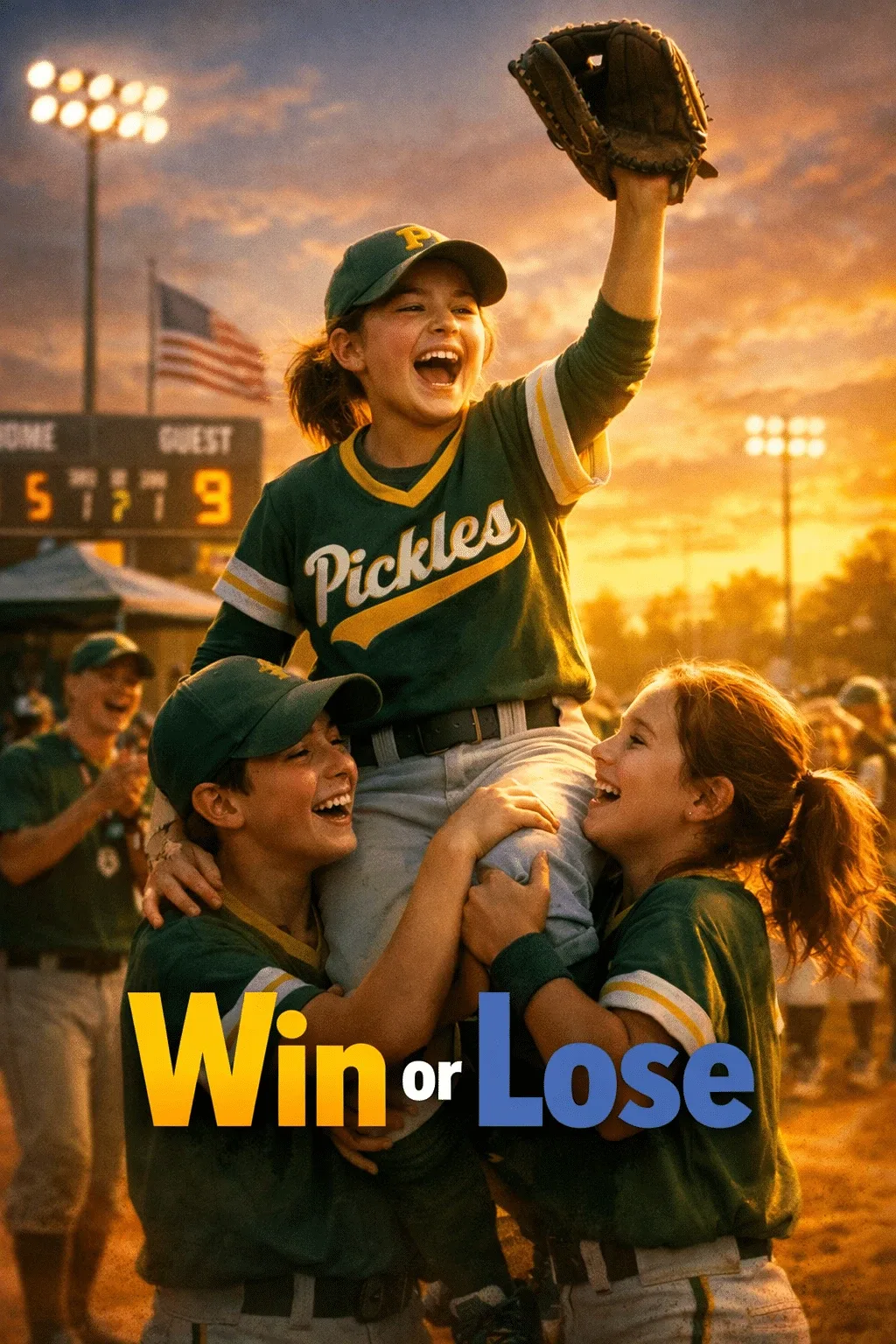
Hello, everyone! How’s everything? Today, I’m excited to dive into the drama Win or Lose, which marks Pixar Animation Studios’ first original long-form animated series, focusing on a middle school softball team known as the Pickles during the week leading up to their championship match.
Advertisements
The 8-episode series launched on Disney+ on February 19, 2025, with weekly releases until March 12. Crafted by Carrie Hobson and Michael Yates, each episode spans around 25-30 minutes, presenting the same week through the eyes of different characters. The series boasts a notable 89% rating on Rotten Tomatoes and an 8.0/10 on IMDb, signifying a successful foray for Pixar into serialized storytelling.
What sets Win or Lose apart is its innovative visual storytelling. Each episode provides insight into a character’s life off the field, showcasing their humorous, emotional, and relatable viewpoints through a distinctive visual style that adapts to their personality and outlook. This groundbreaking approach highlights Pixar’s animation prowess while delving into the shared experience of adolescence viewed through the lens of competitive sports.
Eight Perspectives on One Championship Week
The narrative centers on a co-ed middle school softball team, the Pickles, during the week prior to their pivotal championship game. Each episode presents the viewpoint of a different team member during the same events, each depicted in a distinctive visual style. Instead of focusing on the entire group, the series zeroes in on one character per episode, weaving a tapestry of interlinked stories.
This narrative design brilliantly reveals how individuals experience identical events in vastly different ways. What may appear trivial to one character can be a pivotal moment for another. While the championship game serves as the focal point, the true drama unfolds in the quieter moments outside of practice and game day—during family dinners, conversations in bedrooms, and the moments of introspection where these young individuals confront issues of identity, friendship, and the pressure to excel.
Each episode unveils another facet of the community surrounding the Pickles, illustrating how sports intertwine with family dynamics, socioeconomic pressures, personal doubts, and the intricate social hierarchies of middle school life. This series powerfully conveys that for these characters, softball transcends being just a game; it becomes a lens through which they interpret their entire existence.
Coach Dan and Adult Insights: Will Forte’s Genuine Leadership
Will Forte lends his voice to Coach Dan, infusing the character with a mix of sincerity and gentle humor, portraying a coach who genuinely cares for his players as individuals, not merely as athletes. Forte’s performance anchors the series in a relatable adult perspective without condescending to the younger characters or the viewers.
Coach Dan embodies the type of adult figure many of us longed for during our own awkward middle school experiences. He faces his own personal challenges while striving to guide a group of children through one of the most intense weeks of their young lives. Forte masterfully balances the roles of authority and mentor, highlighting how effective coaches recognize that their responsibilities extend beyond teaching proper batting techniques.
Episodes that include adult viewpoints, such as those of parents and community figures, enrich the children’s stories. These adults are not simply obstacles or sources of support; they are well-rounded characters with their own aspirations, fears, and connections to both the game and their roles in the children’s lives.
The Pickles Team: A Mix of Genuine Voices
The young voice cast, featuring Milan Elizabeth Ray, Ian Chen, and others, delivers an impressive authenticity to their roles. Each Pickles player possesses a unique personality, family background, and relationship with softball that feels genuine rather than clichéd.
Notably, the series addresses the diversity of its characters in a way that avoids tokenism or forced representation. These children come from a variety of backgrounds, family structures, and economic circumstances, united by their passion for softball. Their interactions resonate with authenticity, capturing how real middle schoolers navigate friendship, rivalry, and team dynamics.
The animation style adapts for each character’s episode, beautifully complementing the voice performances and creating a visual language that enhances audience understanding of each character’s worldview. Some episodes burst with color and energy, while others adopt a more subdued and reflective tone, mirroring the internal experiences of the characters whose perspectives we follow.
Visual Innovation: Animation Enhancing Narrative
One of Win or Lose’s standout achievements is its use of animation style as a narrative tool. Each episode showcases a unique visual approach that mirrors the emotional state and personality of the character at the center. This is not merely aesthetic; it serves as a sophisticated narrative strategy that allows audiences to connect with the characters on a deeper level.
The animation styles vary from vibrant and frenetic to more muted and realistic, with some episodes featuring elements that evoke a dreamlike or surreal quality, particularly when characters are experiencing heightened emotions. Pixar’s technical expertise shines through, yet it never overshadows the poignant human stories at the core of the series.
This method also enables the series to explore complex themes and emotions that might be challenging to express through conventional animation. When a character feels overwhelmed, their surroundings might appear more chaotic and fragmented. Conversely, when they are focused and confident, everything may seem clearer and more lively.
A Triumph on Disney+
Win or Lose has been lauded as a successful introduction for Pixar’s foray into serialized content, currently holding an 89% rating on Rotten Tomatoes. Critics have particularly highlighted how the series respects its young viewers while crafting stories that also resonate with adults, a hallmark of Pixar’s finest works.
Some reviews describe the series as charming yet somewhat compromised, although the overall reception has been largely positive. Disney+ subscribers have embraced this inaugural original Pixar series, many praising its authentic depiction of middle school dynamics and familial relationships. The weekly episode release schedule has allowed viewers to appreciate each character’s distinct viewpoint while eagerly anticipating the next installment.
Both critics and audiences have noted how the series captures the intensity of middle school sports while remaining aware that these characters are young individuals discovering themselves and their place in the world. It embodies the thoughtful, character-driven storytelling that Disney+ aims to present.
If you enjoy narratives about growing up, team dynamics, and how perspective shapes our understanding of reality, Win or Lose is an ideal series to follow weekly on Disney+. It’s a show that confirms Pixar’s storytelling excellence seamlessly translates to the small screen, offering the depth and emotional resonance expected from the studio, with a format that allows even more character exploration.
Tags: Pixar animation, middle school sports, coming of age, Disney+ original, perspective storytelling
Summary: A brilliantly crafted series that uses innovative animation techniques and multiple perspectives to create the most authentic and emotionally resonant portrayal of middle school life in recent memory.
Series Information:
Number of Episodes: 8
Platform: Disney+ (US) / Disney+ (International)
IMDb Rating: 8.0/10
Genre: Animated Comedy-Drama
Protagonists: Milan Elizabeth Ray (Rochelle), Will Forte (Coach Dan), Ian Chen, Josh Thomson
Antagonist: Personal insecurities and competitive pressure (internal conflicts)